
Why Our Naperville Dentists Recommend Treating Cracked Teeth
 You’re eating popcorn, biting into an apple, or maybe you just wake up with a weird, sharp twinge when you sip your morning coffee, and suddenly you’re wondering, “Wait, did I just crack a tooth?”
Cracked teeth are way more common than most people think, and they don’t always come with a dramatic “snap.” Sometimes it’s a tiny hairline fracture you can’t even see. Other times it’s a jolt of pain that stops you mid-bite. Either way, if something feels off with one of your teeth, it’s worth paying attention to, because a small crack today can turn into a much bigger (and pricier) problem tomorrow.
At River Walk Family Dental, your dentists in Naperville, IL, we see cracked teeth all the time, and most cases are very treatable, especially when caught early. If you have a cracked tooth, schedule an appointment at our Naperville dental office by calling 630-579-6000.
Why We’re the Best Choice for Urgent Dental Care in Naperville
Tooth pain doesn’t wait for a convenient time, and neither should you. When you’re dealing with a cracked tooth, here’s why patients across the Naperville area trust River Walk Family Dental for urgent care:
- Fast, Same-Week Appointments – We know a cracked tooth can go from “mildly annoying” to “can’t think about anything else” fast. That’s why we prioritize getting urgent patients in quickly.
- Experienced, Gentle Dentists – Our team has treated hundreds of cracked and fractured teeth, so we can accurately diagnose the type of crack and recommend the right fix the first time.
- Modern Diagnostic Technology – Digital X-rays and intraoral cameras help us spot hairline fractures that aren’t visible to the naked eye, so nothing gets missed.
- A Judgment-Free Environment – Dental anxiety is real, especially when you’re already in pain. Our office is designed to keep you comfortable from check-in to checkout.
- Transparent Pricing and Insurance Help – We’ll walk you through your treatment options and costs upfront, and our team works with most major insurance plans.
- A True Family Practice – We treat patients of all ages, so whether it’s you or your child with a cracked tooth, you’re in the same trusted hands.
What Causes a Cracked Tooth?
Teeth are strong, but they’re not invincible. Cracks usually happen because of one (or a combination) of these everyday culprits:
- Chewing on hard foods (ice, hard candy, popcorn kernels, nuts)
- Teeth grinding or clenching (especially at night, often without you even realizing it)
- A blow to the face or mouth (sports injuries, falls, or accidents)
- Large fillings that weaken the remaining natural tooth structure
- Age-related wear and tear (most cracked tooth cases show up in patients over 40)
- Sudden temperature changes, like biting into something hot right after something ice cold
Sometimes it’s not one big event. It’s years of small stress adding up until, one day, that stress finally wins.
Signs You Might Have a Cracked Tooth
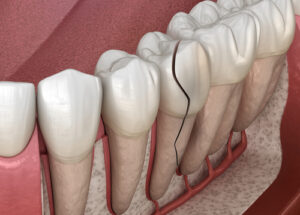 Cracked teeth can be sneaky. Here’s what to watch for:
- Pain when chewing or biting down, especially when you release the bite
- Sharp sensitivity to hot, cold, or sweet foods that comes and goes
- Swelling around a specific tooth or in the gums nearby
- A visible line or chip you can feel with your tongue
- Discomfort that’s hard to pinpoint to one exact tooth
If any of this sounds familiar, don’t wait it out. Cracks don’t heal on their own, and they tend to get worse, not better, over time.
How Your Naperville Dentists Treat Cracked Teeth
Treatment really depends on the size, location, and depth of the crack. Here’s what our Naperville dentist team might recommend:
- Dental Bonding: for minor cracks, a tooth-colored resin can repair the surface quickly and affordably
- Dental crown: for larger cracks, a crown covers and protects the tooth from further damage
- Root Canal Therapy: if the crack has reached the tooth’s pulp (the nerve), a root canal saves the tooth and relieves pain
- Tooth Extraction: in rare, severe cases where the crack extends below the gumline, removal may be the safest option, with replacement options like implants or bridges available
The earlier you come in, the more conservative (and less expensive) your treatment options usually are. That’s why we always encourage patients not to “wait and see” with tooth pain.
Think you might have a cracked tooth? Schedule an appointment with River Walk Family Dental today by calling 630-579-6000.
Frequently Asked Questions
No. Unlike bone, tooth enamel cannot regenerate or heal itself once it’s cracked. A crack won’t go away on its own, and in most cases it will slowly worsen with continued chewing pressure and everyday wear. Even if the pain comes and goes, that doesn’t mean the crack is healing. It usually just means the nerve is still reacting inconsistently. The only way to truly resolve a cracked tooth is with professional dental treatment, so it’s important to get it evaluated as soon as possible rather than hoping it resolves itself.
It depends on the severity, but many cracked teeth do qualify as urgent dental issues. If you’re experiencing significant pain, swelling, bleeding, or a tooth that feels loose, you should contact your dentist right away or seek emergency care. Even if the pain is mild, a crack that reaches the inner pulp of the tooth can allow bacteria to enter, which may lead to infection or abscess if left untreated. When in doubt, it’s always safer to call your dentist and describe your symptoms so they can advise you on next steps.
Costs vary widely depending on the treatment needed. Simple bonding for a minor crack is typically the most affordable option, while a crown, root canal, or extraction with replacement will cost more due to the complexity of the procedure. Many dental insurance plans cover at least a portion of crack-related treatments, especially when they’re deemed medically necessary. The best way to get an accurate estimate is to schedule an exam so your dentist can assess the crack and walk you through your specific treatment plan and pricing.
A few simple habits go a long way. Avoid chewing on ice, hard candies, popcorn kernels, and other hard objects like pens or fingernails. If you grind or clench your teeth at night, ask your dentist about a custom nightguard to protect your enamel while you sleep. Wearing a mouthguard during sports is also essential if you’re active in contact activities. Finally, keeping up with routine dental checkups allows your dentist to catch weak spots, worn fillings, or early stress fractures before they turn into full cracks.
Don’t Let a Cracked Tooth Crack Your Confidence!
A cracked tooth might feel like a minor annoyance at first, but left untreated, it can lead to bigger issues: pain, infection, or even tooth loss. With the right care, most cracked teeth can be treated quickly, comfortably, and affordably.
If you’re in Naperville, Aurora, Lisle, Wheaton, Bolingbrook, Plainfield, or Woodridge and think you might have a cracked tooth, don’t wait for it to get worse. Contact our Naperville dental office by calling 630-579-6000. River Walk Family Dental is ready to get you smiling comfortably again.